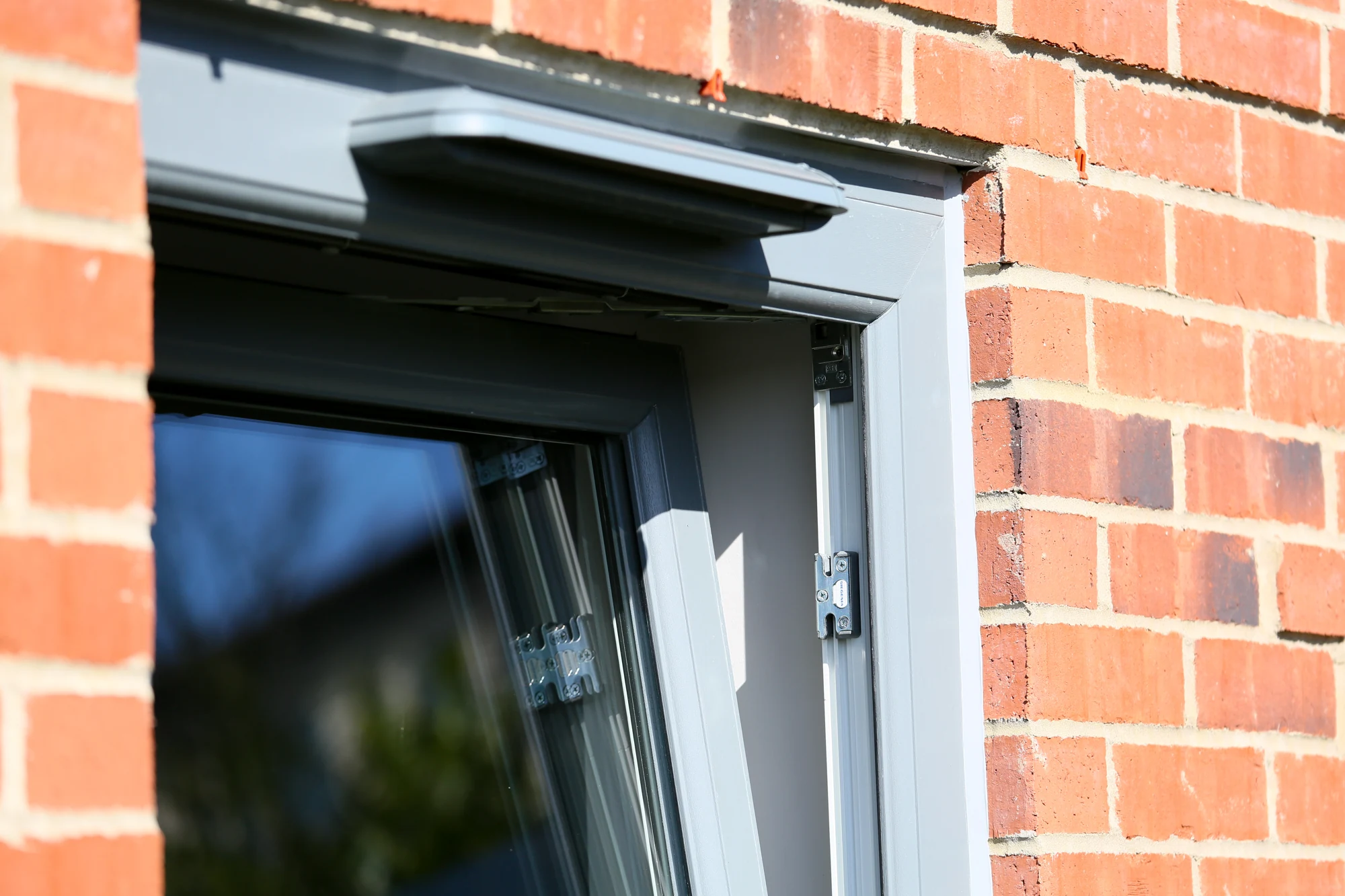
The differences at a glance
| Decision | Casement | Tilt-and-turn |
|---|---|---|
| Typical movement | An opening sash hinges outwards in common UK arrangements. | The sash tilts inward or opens inward in turn mode. |
| Inside the room | Usually leaves the interior opening arc clear. | Needs clearance for inward turn mode. |
| Outside the room | Check paths, planting and nearby obstacles. | No outward swing in the usual inward-opening arrangement. |
| Cleaning plan | Depends on hardware, position and safe access. | Inward opening can bring glass within reach; assess actual access. |
Mark the movement on the room plan
For a casement, draw the outward sweep and consider paths, nearby walls and other openings. For tilt-and-turn, draw the full inward turn arc, including the handle. Check curtains, blinds, taps, lamps and furniture. The everyday tilted position does not show the space needed when the sash is fully opened. Ask for a demonstration with a sash of comparable dimensions.
Match ventilation to how you live
Think about who will operate the window and how often. Can they reach and turn the handle comfortably? Is there room to move objects from the sill? Ask about the operating sequence, restrictors and appropriate hardware. Neither a tilted-open window nor a restricted opening should be assumed equivalent to a closed and locked one. Have the supplier establish the appropriate arrangement for each room.
Make cleaning an explicit requirement
Inward access can be attractive upstairs, but check how much of the glass and frame you can actually reach safely. Casement cleaning options vary with the hinge arrangement and installation position. Do not choose an opening style solely because a brochure mentions easy cleaning. Ask the surveyor to document the practical method, and have any room-specific ventilation, safety or escape requirements checked for the actual opening.
What this means for a real brief
A kitchen window sits behind a tap and beneath a close-fitting blind. Tilt-and-turn looks appealing for cleaning, but its inward arc clashes with the fittings. A suitable casement arrangement may work better, or the room layout needs changing before the order is approved.
Turn the comparison into a shortlist
Mark each proposal as confirmed, needs clarification or does not meet the brief. Resolve a failed essential requirement before scoring cosmetic preferences. If both options meet the essentials, compare the extra cost of the details you will notice every day.
- Write down the three essentials for your project: appearance, everyday operation and any required performance.
- Request a dimensioned drawing with opening direction, handles and the exact model.
- Keep glass, finish, survey and fitting scope consistent between quotations.
- Ask for written delivery, warranty and aftercare responsibilities.
- Keep allowances separate from confirmed costs; compare VAT on the same basis.
Manufacturer references
Checked 12 October 2026. Our buying scenarios and decision guidance are editorial interpretation. Manufacturer names identify comparison options and do not imply an approved dealership or confirmed supply relationship.