The useful answer
Choose bifolds when opening up the room is your priority and you have somewhere for the panels to stack. Choose sliders when the view with the doors shut and keeping furniture clear of swinging leaves matter most. Everyday access can decide the choice before frame styling does.
Think about a wet Tuesday as well as a summer party
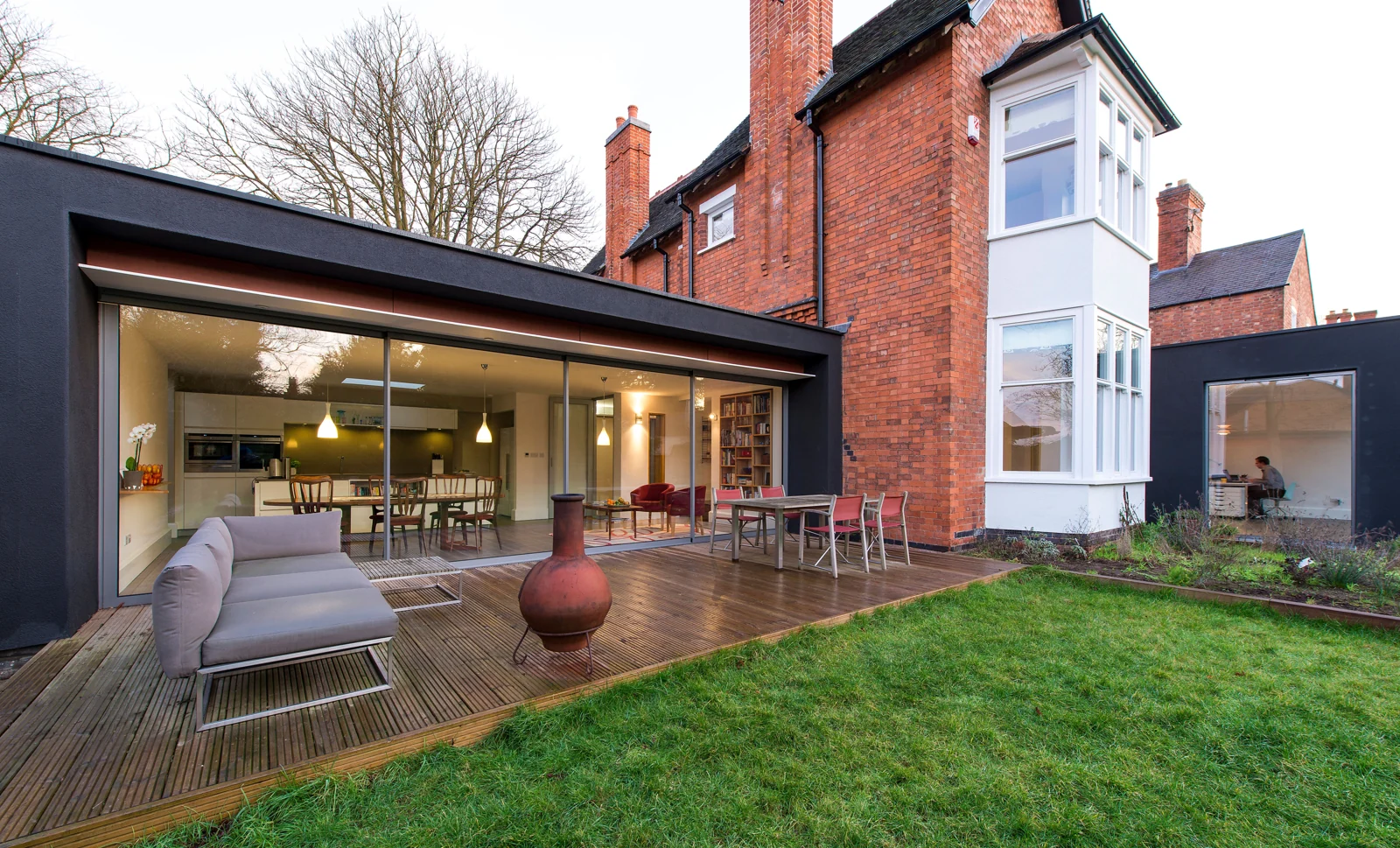
A folding wall looks wonderful fully open, but the closed elevation is what you see for much of the year. Bifolds usually put more vertical frame divisions across the view. Sliders can use larger individual panes, while leaving part of the opening glazed when open. The useful comparison is two drawings for your own opening, not two photographs of different houses.
There are three different widths to consider: the overall frame, the daily walk-through route and the maximum opening. Put all three on your comparison sheet. For bifolds, check whether the proposed traffic leaf operates independently and locks from outside. For a slider, check where the handle sits, how much passage one movement creates and whether the parking panels block the route to your steps.
A situation you can apply to your own project
A family has a wide kitchen opening, a dining table close to the glass and a separate utility door to the garden. A slider is worth testing first because daily access is already solved and the view is important. In the same room without the utility door, easy daily operation becomes a higher priority: compare a traffic-door bifold with a slider that has the required outside locking. The extra door changes the decision even though the opening is identical.
Compare the practical details
| Decision | What it means for your project |
|---|---|
| Closed-door view | Compare the full elevation from your sofa, including every meeting stile. |
| Entertaining | Draw the usable opening and the stack or parked panels, not the empty structural aperture. |
| Small patio | Check folding-leaf projection against outdoor chairs and the garden route. |
| Daily access | Try unlocking, opening and closing just the everyday passage from both sides. |
Work through the specification
How much opening do you want?
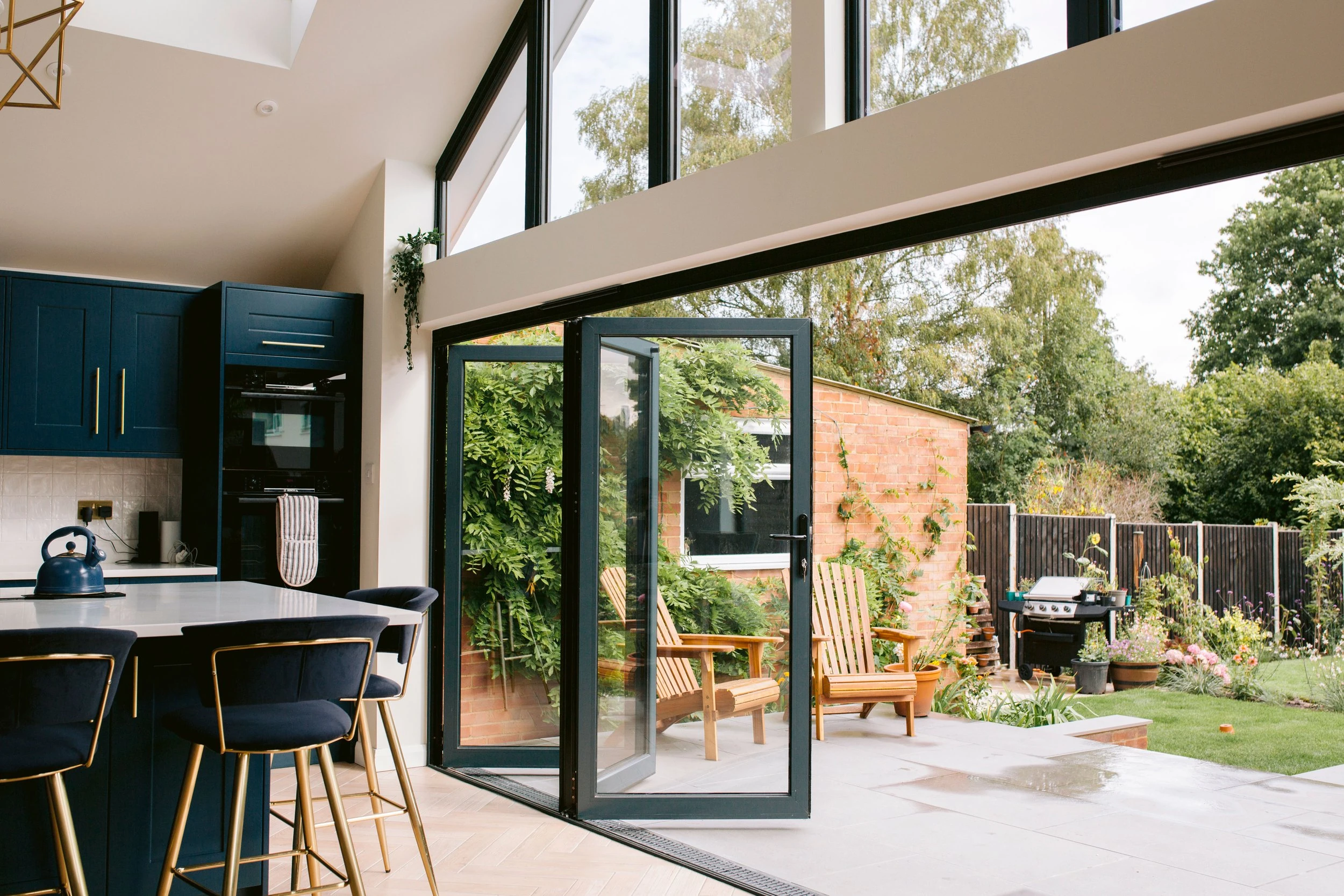
Bifolds stack to the side. Sliders move behind other panels. Compare the actual clear opening for each proposed layout, rather than the overall frame width.
What matters when the doors are closed?
Sliding doors can use larger glass panels with fewer vertical divisions. Bifolds offer a different rhythm of narrower panels. Look at both from your main seating position.
Where will the panels go?
Allow stacking space for bifolds. Sliding panels stay within the track line. Outdoor furniture, curtains and walkways can influence the decision.
Compare complete specifications
Ask for the same dimensions, finish, glazing and installation scope. A lower headline price is not a useful comparison if the products differ.
Your checklist before the next conversation
- Draw furniture with chairs pulled out
- Mark the preferred daily route
- Ask for clear opening dimensions on both proposals
- Try comparable door samples before deciding