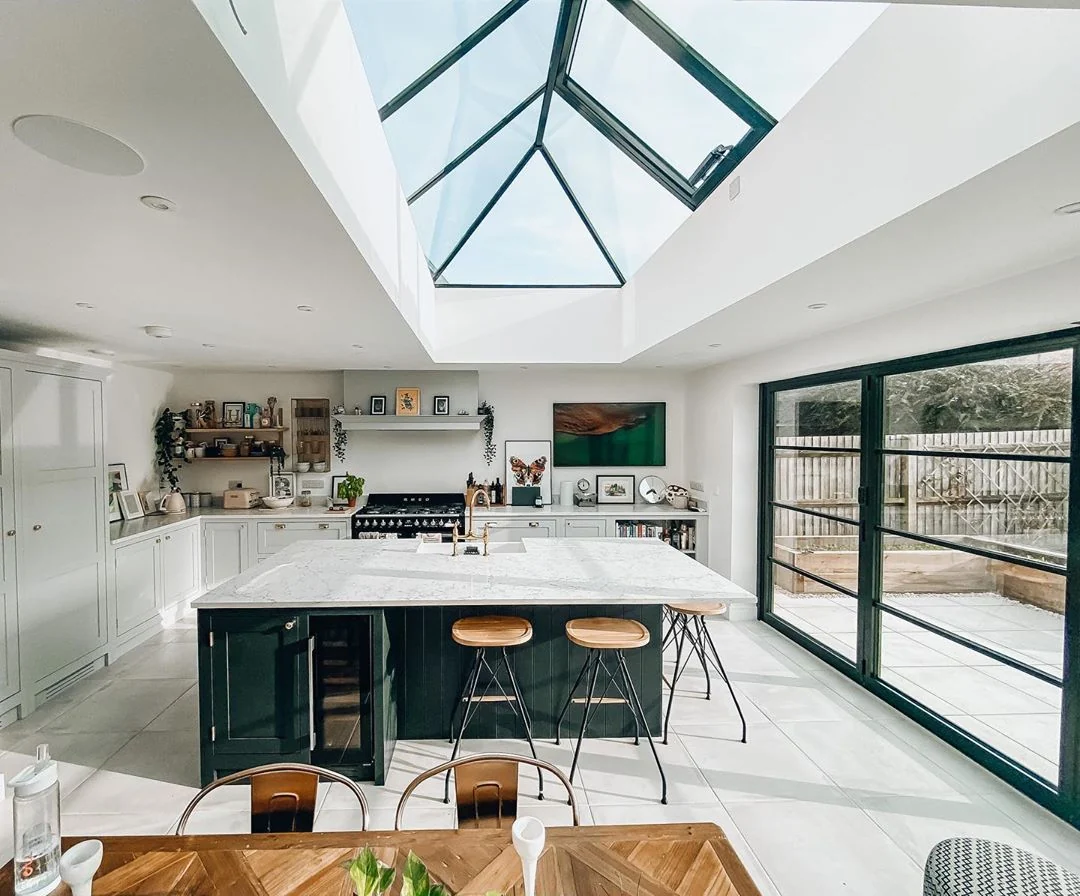
The useful answer
Plan safe cleaning access and realistic rain-noise expectations before ordering roof glazing. Self-cleaning coatings do not remove the need for inspection or every type of cleaning, and standard rooflights must not be treated as walk-on surfaces.
Consider maintenance after the builders have left
Construction access is temporary. Once the extension, landscaping and neighbouring boundaries are finished, the route used to fit the glazing may no longer be available. Ask how the exterior glass, seals and drainage areas will be inspected without standing on the glass. Keep the manufacturer’s cleaning instructions, especially for coated surfaces, and use an appropriate contractor where access is not safe from a normal position.
Rain noise is a separate question from traffic-noise insulation. Glass build-up, roof geometry, room finishes and rainfall all influence the experience. Ask what relevant evidence the supplier has for a proposed acoustic claim rather than treating a general sound rating as a rainfall guarantee. Soft furnishings can change room reverberation, but they do not alter the impact of rain on the external surface.
A situation you can apply to your own project
A rooflight sits above a home office where video calls happen daily. Include rain-noise expectations in the brief before glass is selected, alongside glare and ventilation. A demonstration in dry weather cannot answer the rain question. Request the available evidence and discuss whether another position or room layout would make more sense for focused work.
Compare the practical details
| Decision | What it means for your project |
|---|---|
| Coated glass | Use the specified cleaning products and methods; avoid assuming all coatings behave alike. |
| Leaves and debris | Arrange inspection of relevant drainage areas without standing on the unit. |
| Rain over a quiet room | Ask for evidence relevant to roof glazing and the actual glass build-up. |
| Future replacement | Keep a route for handling glass or identify a realistic lifting method. |
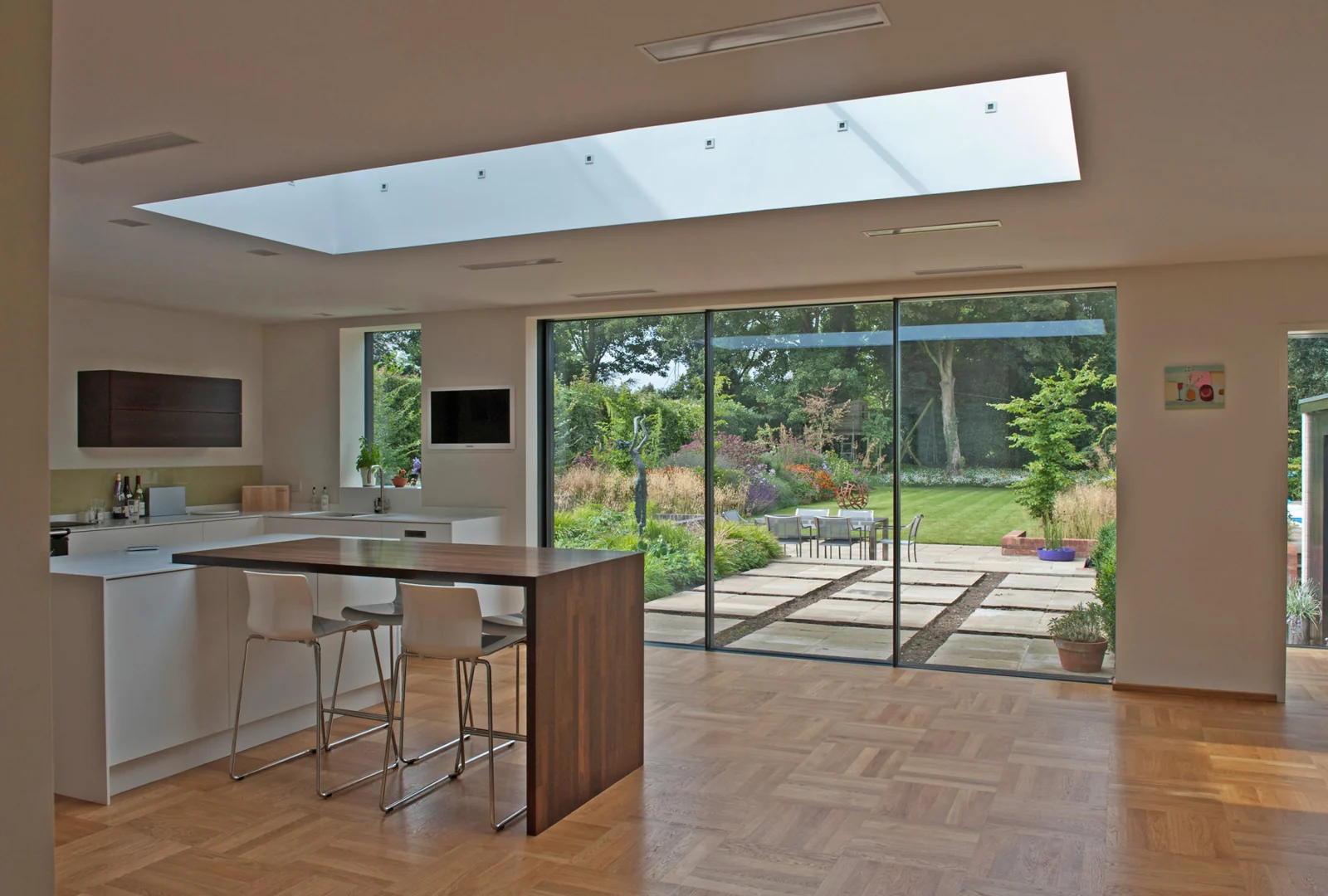
Work through the specification
Plan a safe cleaning method
Identify who will clean the glazing and how they will reach it. Ask for the supplier’s care instructions and discuss a suitable access plan with the installer. Do not treat roof glazing as a surface to stand on.
Understand the limits of a coating
If self-cleaning glass is proposed, ask what conditions it needs, which deposits it addresses and what maintenance remains. Keep the approved cleaning products and methods with your handover documents.
Describe your expectations about rain
A roof over a quiet office raises different expectations from one over a busy kitchen. Ask the supplier about the exact glass construction and any applicable acoustic evidence. Do not treat a generic glass label as a promise about perceived rain noise.
Retain information for future work
Keep glass specifications, product references and installation drawings. Ask how a damaged unit or mechanism would be replaced and whether finished landscaping or roof access changes that work.
Your checklist before the next conversation
- Keep safe access on the roof plan
- Confirm cleaning instructions
- Ask what self-cleaning does and does not cover
- Describe quiet-room uses
- Retain glass and system identification for replacements
Questions people ask
Does self-cleaning mean maintenance-free?
Ask for the exact coating’s care instructions. Plan for inspection and any cleaning that remains necessary.
Can I compare rain noise from videos?
Different rooms, microphones and weather make videos a poor like-for-like test. Ask about the actual proposed construction and evidence.