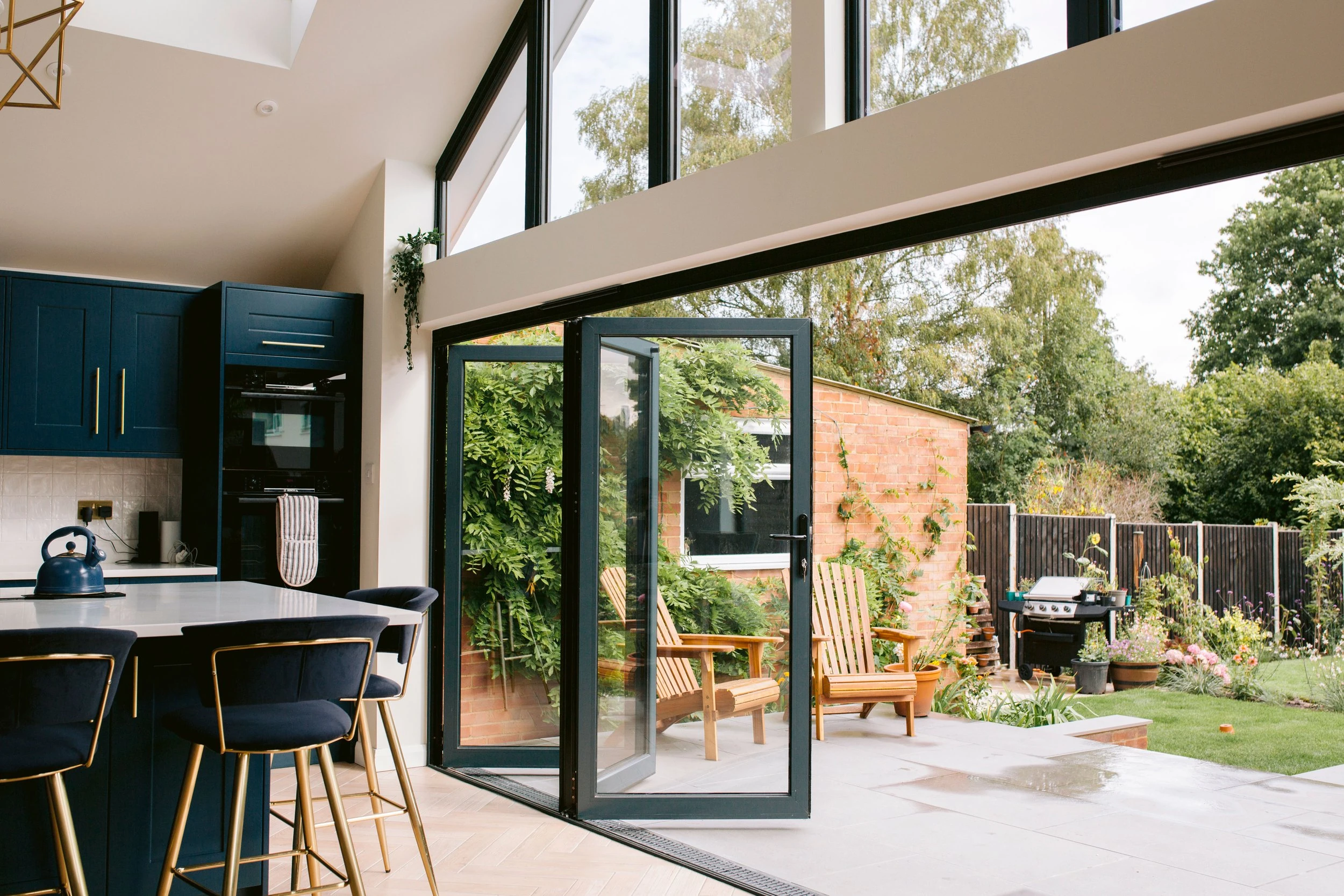
The useful answer
Choose the flap and its position before the glass is made. A flap can interfere with sliding or folding panels, so the supplier must approve the model, projection and prepared glass opening as one arrangement.
Why the glass cannot be treated like a blank panel
The flap’s cut-out, position and fixing requirements must be compatible with the proposed glazing. Do not plan to cut a hole in a finished toughened pane on site. For an existing glazed door, discuss a purpose-made replacement glass unit with the supplier instead of modifying the installed glass yourself.
Check both faces of the flap against panel movement. The projecting housing of a microchip flap may meet an adjacent sliding leaf or prevent bifolds stacking correctly. A fixed sidelight or another suitable door can be a better location where available. Also consider the pet’s approach, the drop outside, cleaning access and whether the flap can be operated without blocking the walking route.
A situation you can apply to your own project
A cat flap in the moving panel of a slider looks convenient when the door is closed, but its external housing may clash with the panel it passes. The same flap in an approved fixed side panel could avoid that travel conflict. Ask for the exact flap dimensions to be checked on the door plan before ordering the glass.
Compare the practical details
| Decision | What it means for your project |
|---|---|
| New glazing | Provide the exact flap model and required cut-out information before manufacture. |
| Existing glazing | Ask about a replacement glass unit; do not assume the current pane can be cut. |
| Sliding or folding panels | Check projection and the full movement path. |
| Pet approach | Consider inside floor level, exterior drop and usable landing space. |

Work through the specification
Choose the location before the glass
Tell the supplier the flap model, intended height and which panel you want to use. Ask whether that position is permitted in the proposed product. The glass supplier must confirm the appropriate glass specification and any prepared opening.
Check the projection on both sides
A flap can protrude beyond the glass. On a slider, compare that projection with the path of the neighbouring panel; on a bifold, consider the folded stack. Ask the supplier to confirm the complete range of movement rather than checking only the closed position.
Include the person using the door
Consider whether the flap interrupts handles, the everyday walking route or the view from the room. A fixed adjacent panel or a different location may be worth discussing if the moving leaf creates conflicts.
Keep the arrangement in the order
Record the flap model, panel reference and approved location on the drawing. Ask who supplies and fits each part, and how the agreed modification affects warranty coverage. Do not assume an existing sealed glass unit can be altered on site.
Your checklist before the next conversation
- Choose the exact flap model
- Send dimensions for both faces
- Confirm the glass supplier’s approval
- Check full door movement
- Record glass and flap warranty responsibilities
Sources and specification checks
Use these primary references to check the product or technical point discussed. Match the current document to your exact system and project. Brand research does not confirm that we supply every model.
Questions people ask
Can I add a flap after installation?
Ask the original supplier to assess it. A replacement prepared glass unit or a different solution may be needed.
Will a flap stop my slider opening fully?
It can conflict with another panel. The exact projection and panel clearances must be checked before ordering.