The useful answer
Plan three separate needs: privacy after dark, glare during the day and control of solar heat. A solution that works for one may do little for another, so choose the glazing and shading as a coordinated package.
Test the lighting conditions you actually care about
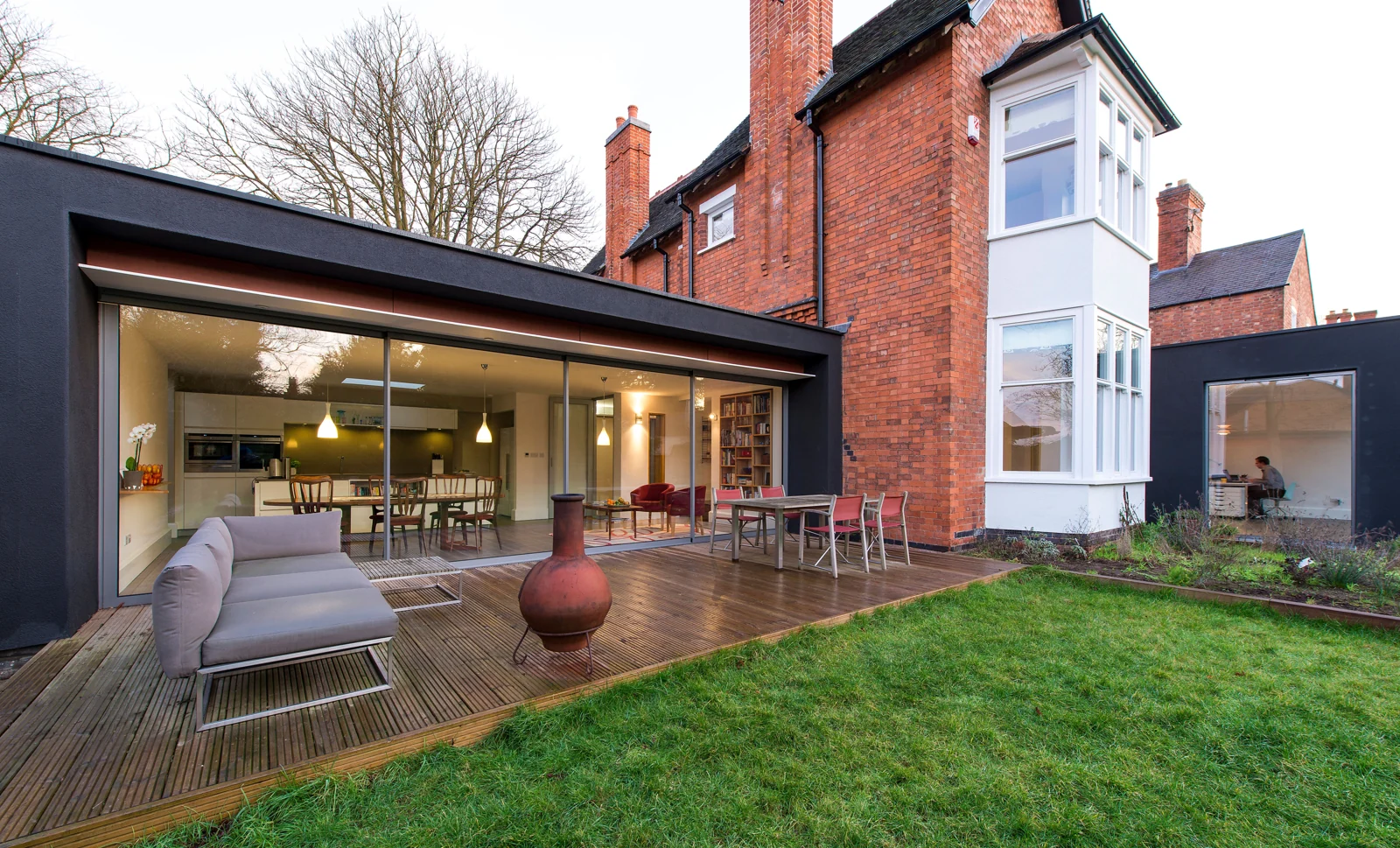
Reflective-looking glass should not be treated as guaranteed one-way privacy. The balance of light on each side affects what can be seen. A room that feels private in daytime can become exposed when its lights are on at night. Ask for samples and compare opaque, translucent and adjustable treatments against your actual privacy requirement.
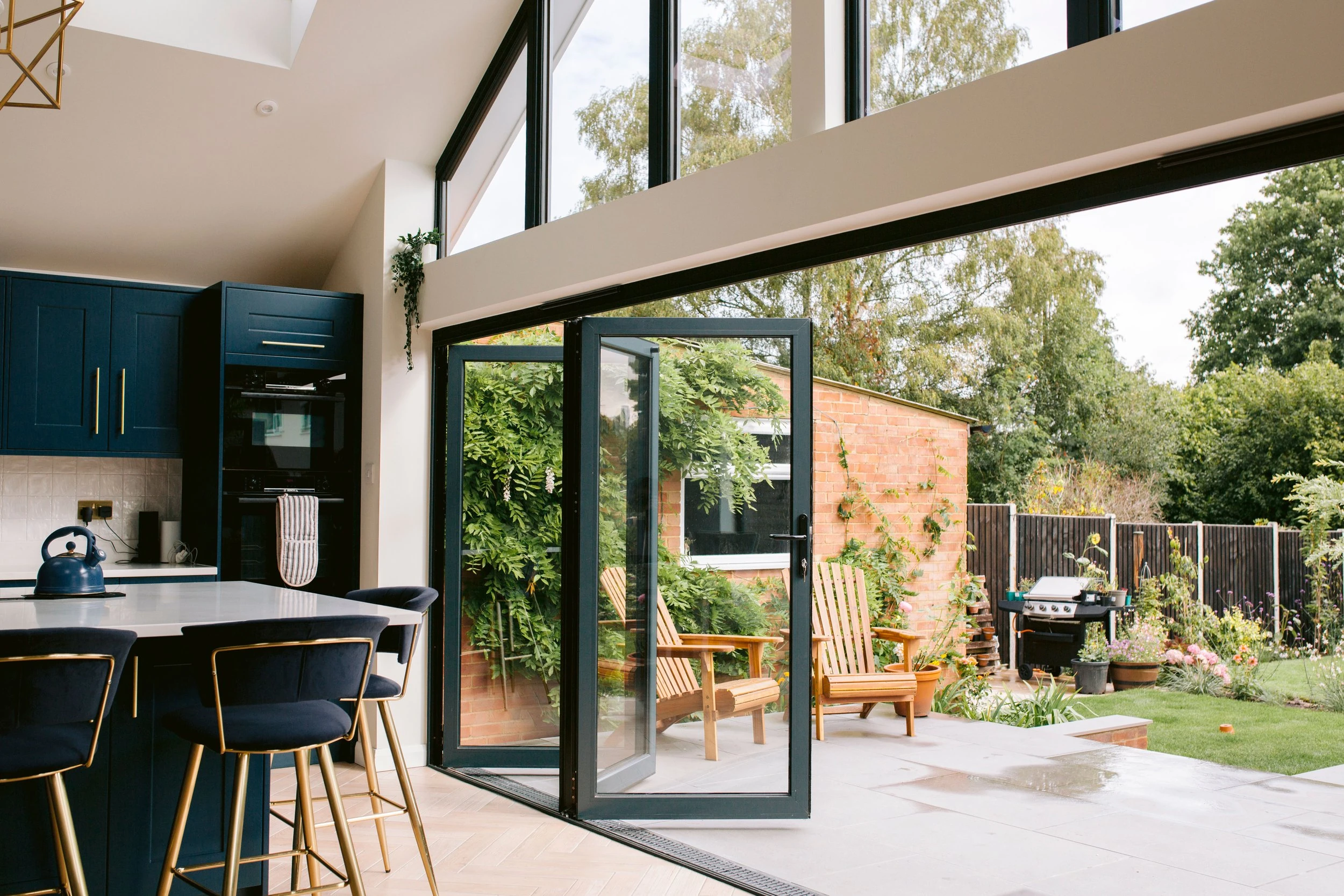
Blinds and curtains need physical space. Headrails, gathered fabric, cords or motors can conflict with handles, inward-opening windows and bifold stacks. Reserve the fixing surface and any power supply before plastering. For summer comfort, discuss external shading and glazing options with the designer as well as internal blinds; the best combination depends on the orientation and room.
A situation you can apply to your own project
A west-facing dining room needs afternoon glare control but the owners want an open garden view most of the day. Adjustable shading may suit better than permanently obscured glass. If neighbouring windows overlook the room after dark, the same brief also needs a nighttime privacy solution. One attractive glass sample does not answer both questions.
Compare the practical details
| Decision | What it means for your project |
|---|---|
| Night privacy | Check with indoor lights on; assess visibility from outside. |
| Screen glare | Identify sun direction and hours when the room is used. |
| Summer comfort | Assess shading, glass and ventilation as a room-wide design. |
| Door operation | Confirm the treatment clears handles, leaves and folded stacks. |
Work through the specification
Check privacy after dark
Consider the room with lights on as well as in daylight. Discuss the type of privacy you need rather than assuming a reflective appearance will work in every lighting condition.
Reserve space before ordering
Measure the available recess and check handles, hinges, opening panels and folded stacks against your proposed blind. Ask the blind supplier to confirm compatibility with the actual frame.
Distinguish glare from heat
Glare at a desk, summer comfort and privacy are separate needs. Compare glass and shading proposals with your designer; ask how each changes daylight, appearance and use.
Plan cleaning and replacement
Ask how integral blinds are serviced and what the warranty covers. For surface-mounted blinds, confirm attachment methods with the frame supplier before drilling or applying fixings.
Your checklist before the next conversation
- List privacy, glare and heat separately
- Check day and night conditions
- Reserve fixing depth
- Coordinate wiring if needed
- Approve attachments with the frame supplier